
Bringing The Outside In
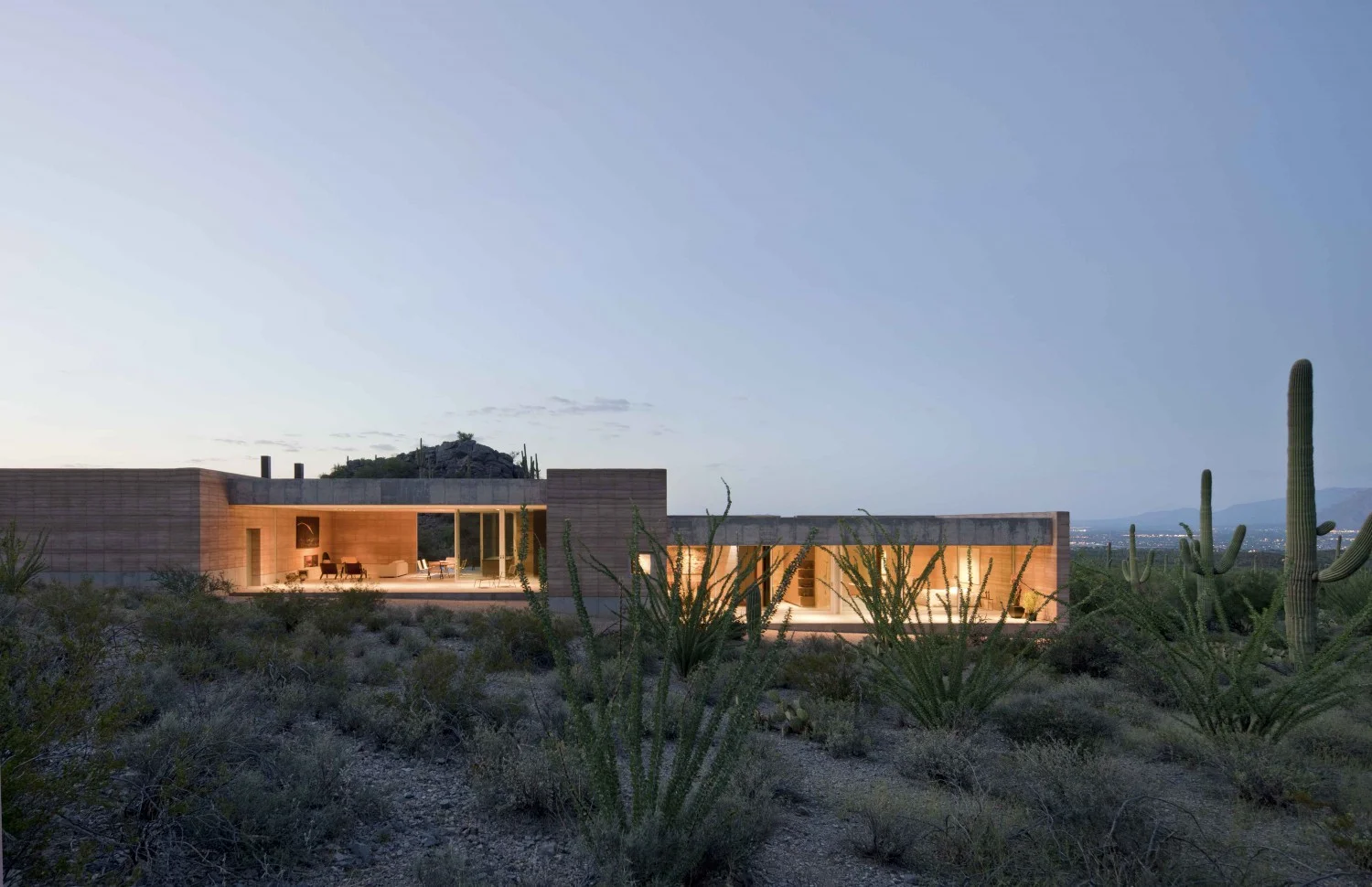
Photography by Bill Timmerman / Architecture by DUST
This article was originally published in NCW in The Spring Issue 2014
As the warm glow of the sun slowly rises and paints the desert sky vibrant shades of orange and pink, a custom soundtrack performed by the Sonoran Desert wildlife begins to play. The majesty and magic of the Arizona landscape is no surprise to Tucson native Dr. David Francis, rather it’s one of the many reasons he fell in love with it. So much so, that he dreamed of one day being able to buy a pristine piece of the land that he and his family could enjoy. Needless to say, when Dr. Francis ran into an old friend who not only happened to live in the Sonoran Desert, but also informed him that his neighbor was putting his land on the market, he didn’t hesitate to make his dream a reality.
A Love For The Land
When Dr. Francis and his wife, Dr. Karen Francis, began what ended up being a four-year journey to create a dream desert mountain retreat, they created a list of must-haves, but made sure to preface that with their architect, Cade Hayes of Tucson-based DUST Architecture, “Cade, don’t let us do anything ugly.” He appreciates art, and he appreciates fine craft. He was very intricately involved in the process every step of the way. Every decision made was collective,” said Hayes.
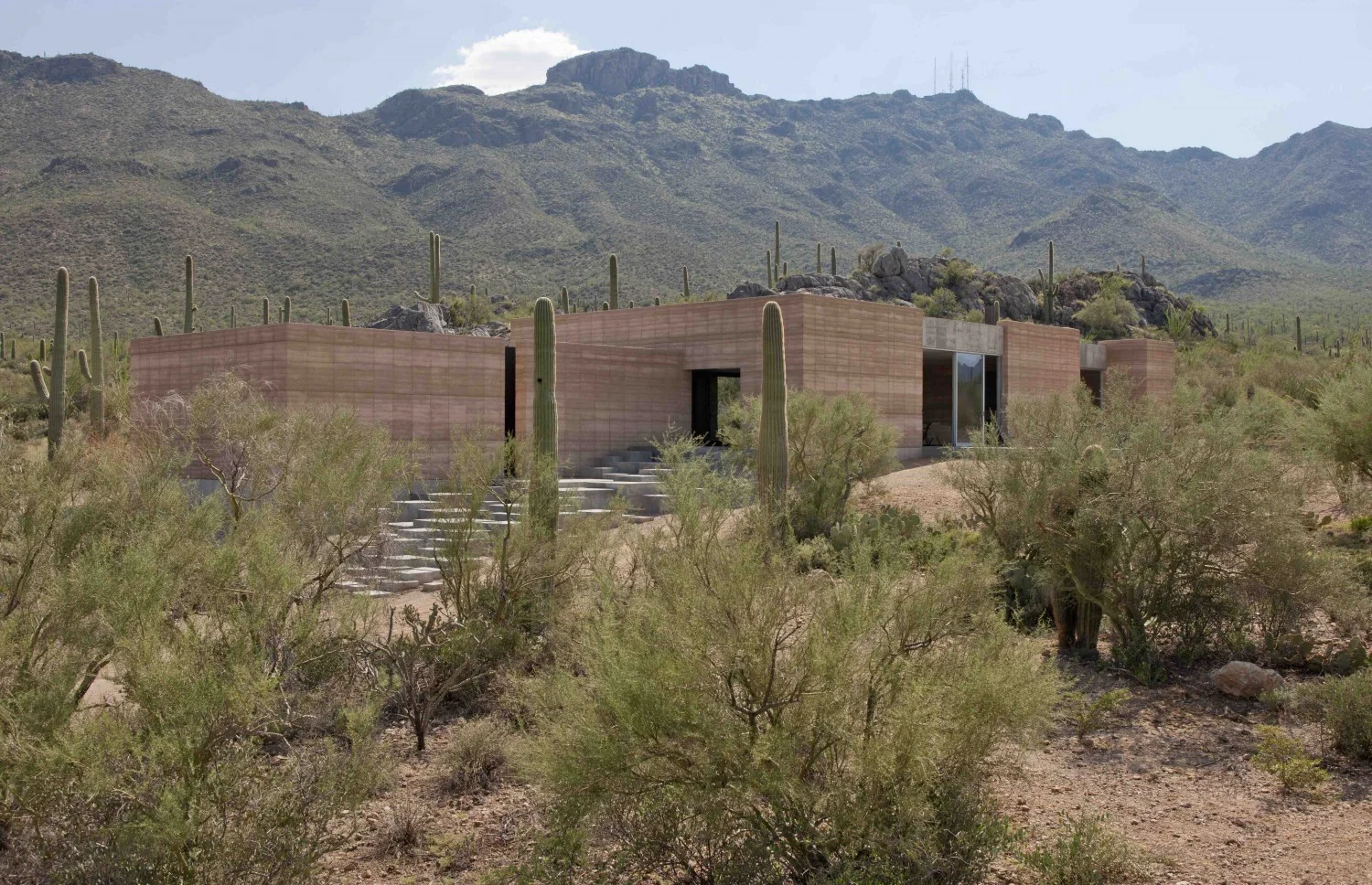
The area around the house is unique for many reasons, including the fact that it is largely surrounded by government-owned land, which will never be built on, including almost 900 feet of common border with the Sonoran National Park. Dr. Francis’ love for the land and its natural beauty really drove the entire project. Hayes remembers one of his first conversations with Dr. Francis, “His initial statement was that he loved the land and that’s why he was doing this project. So I said okay, let’s talk about that, and let’s give you every opportunity to step outside and experience the desert and the landscape.”
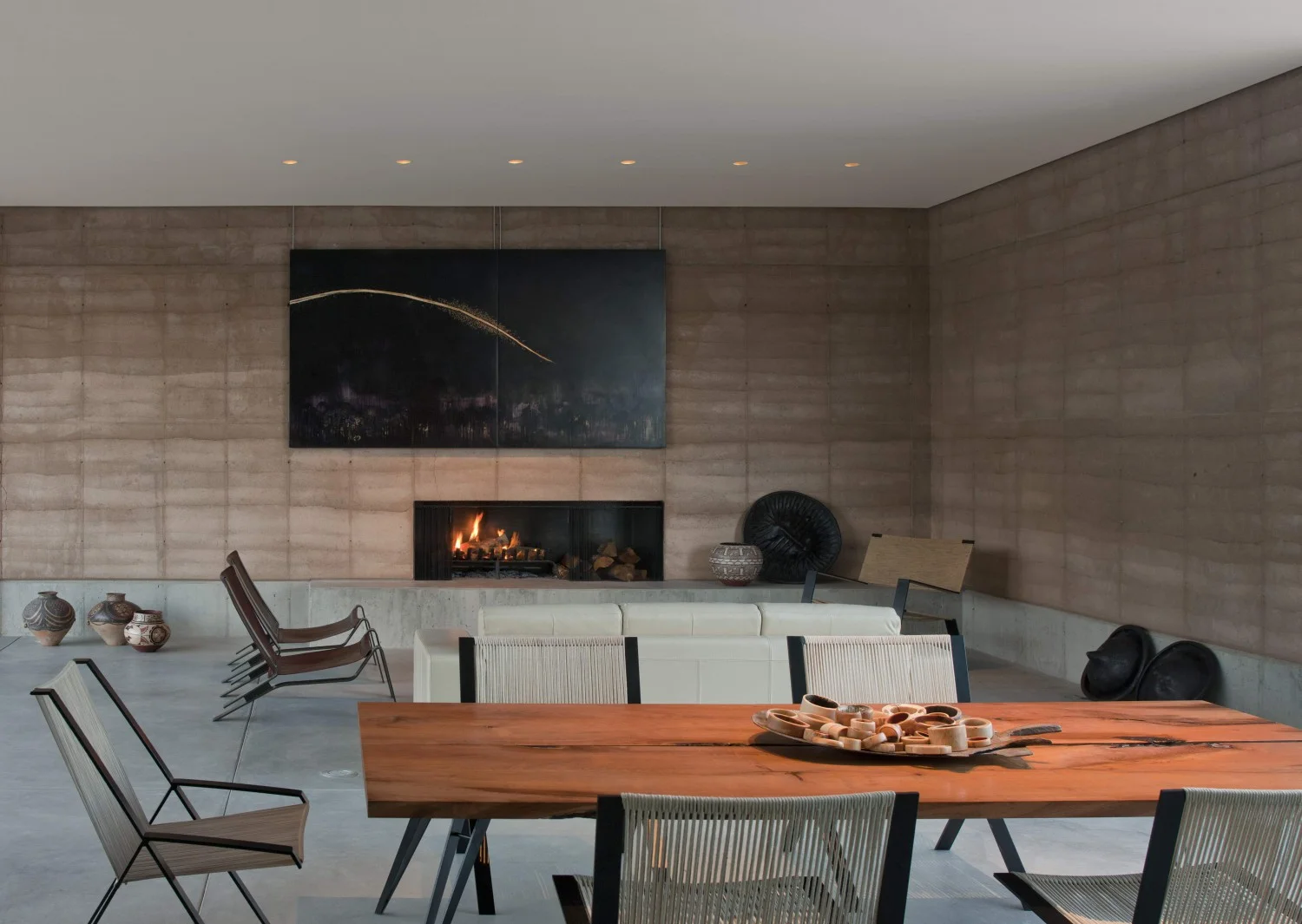
To that end, almost every room has one window wall that is basically open to the desert. In the living room, you can open the window walls and enjoy the breeze that comes down off the Tucson Mountains. “My favorite part of the house is…the outside, right around the house, and the fact that you really feel like you are part of the desert,” says Dr. Francis.
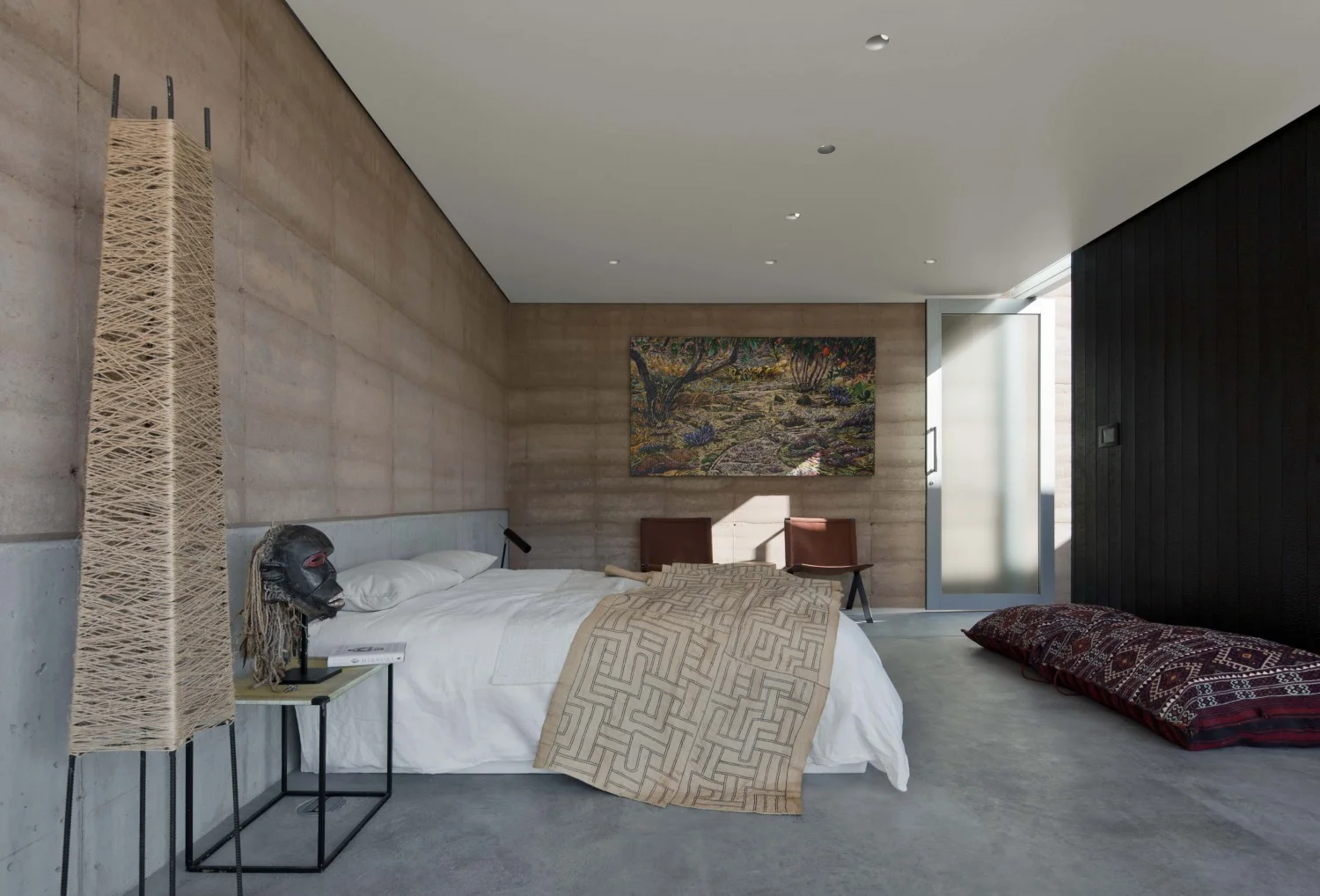
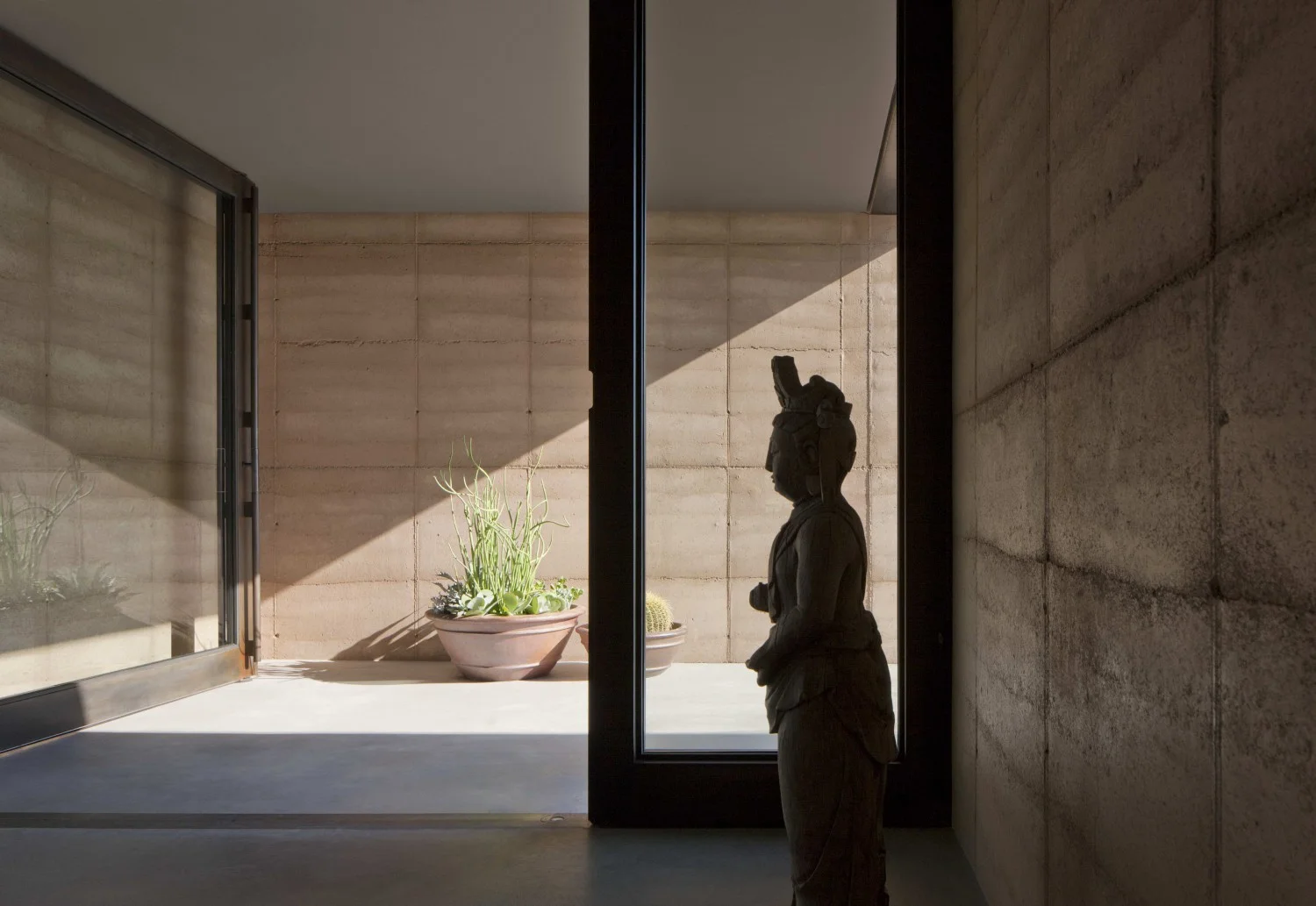
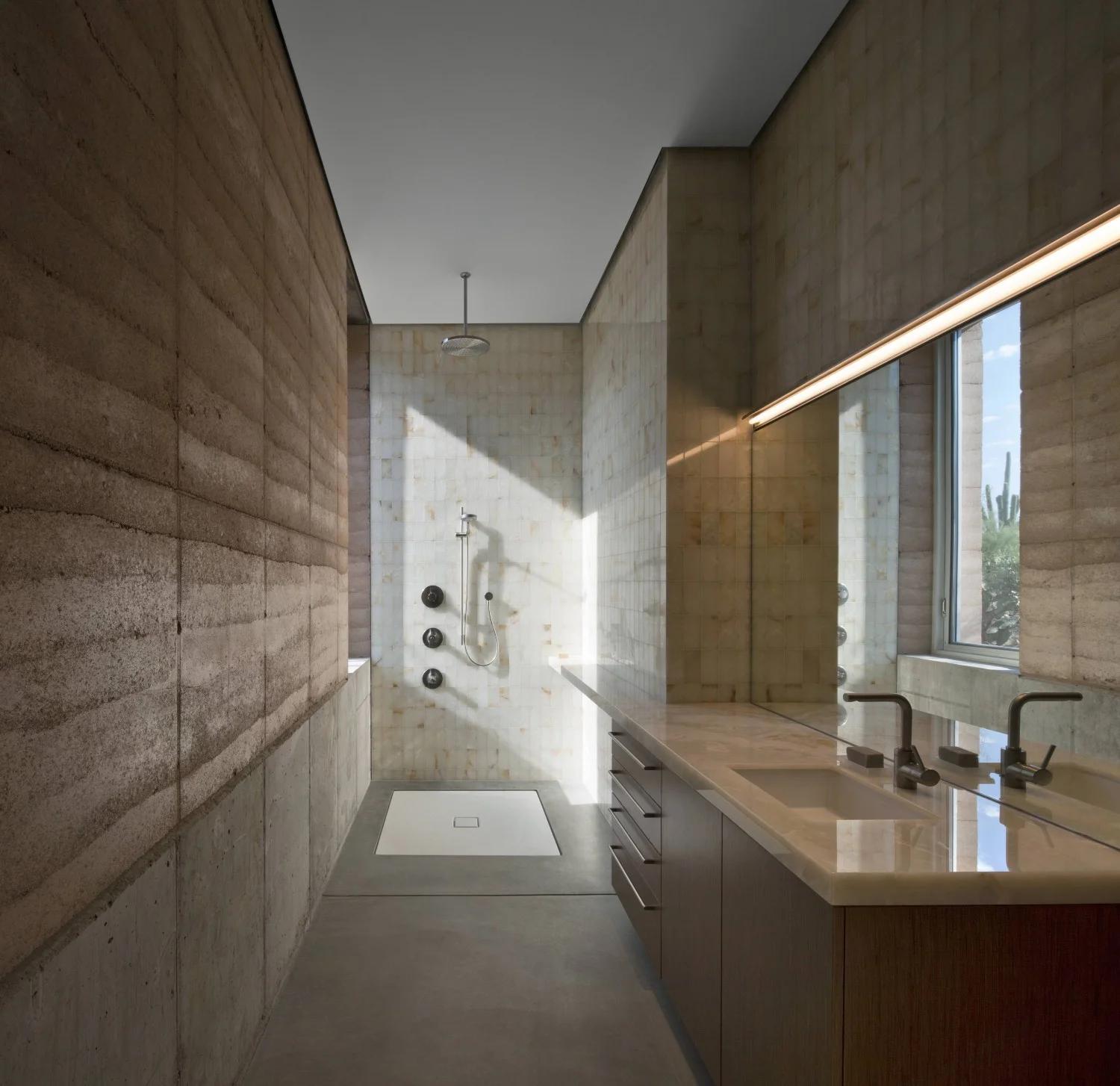
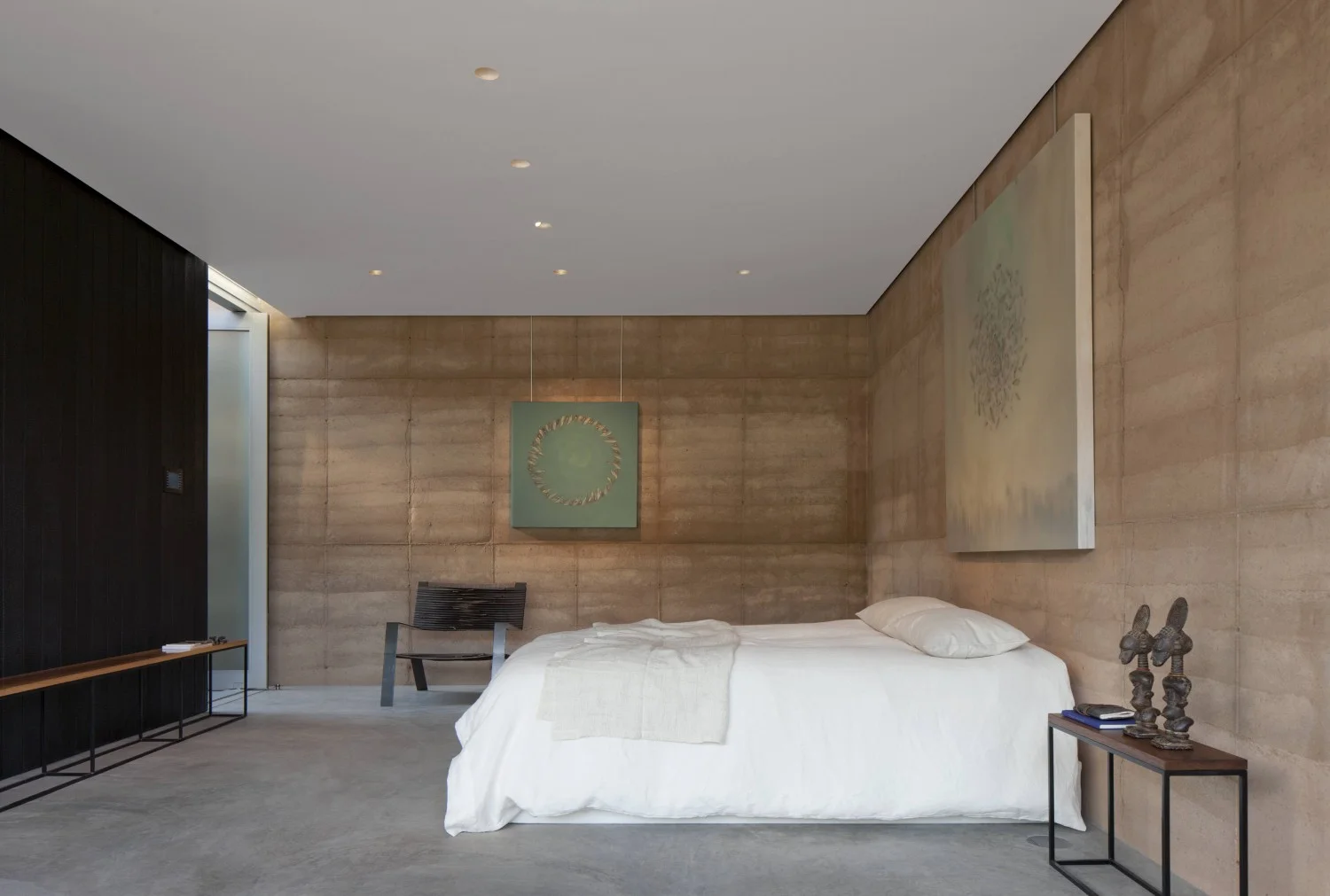
The design of the house was very well thought out, carefully considering every detail. In considering smart and efficient solutions to cool and heat the house, Hayes chose to use the same wall material used to build parts of the Great Wall of China, known as rammed earth. The striated earthen walls are not only striking to look at, but they also absorb heat, which in turn slows heat gain in the house. “We knew we were going to use rammed earth. We really just wanted to use a common-sense strategy, and think about how to live in the desert…and just be really sensitive to the land, so there is minimum impact.” Hayes also incorporated deeply set porches, double-pane glass, heavy roof insulation, no windows on the east/west walls, a 30,000-gallon auxiliary water storage tank, and a 25,000-gallon cistern that catches rainwater off the roof.
Not Just A Home, But A Piece Of Art
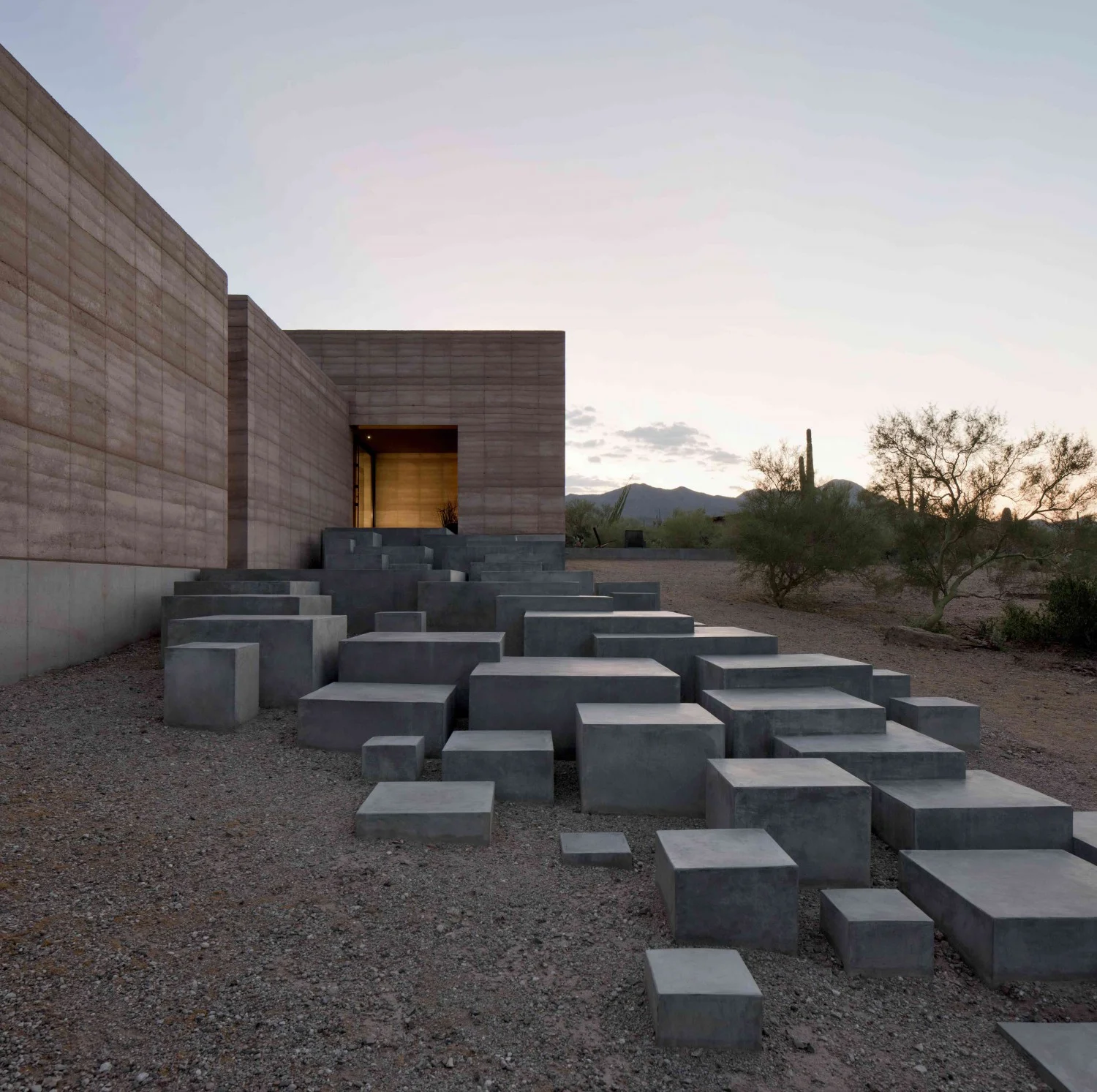
Every part of the house is a new opportunity to engage and interact with the beautiful surrounding environment, which couldn’t be more evident than in the decision to locate the parking 400 feet away from the house. “You turn your back to the city. You’re walking towards your house, through the desert, along the path, and hearing your footsteps on the gravel. Arriving at this sculpture that is also the entry to your home, and in the process of climbing those steps, there is definitely an engagement of the body…it’s easy to forget about other things you are thinking or worrying about,” describes Hayes.
The overall design includes a bevy of custom elements. Hayes explained that he wanted to spend a lot of time on the things that would be touched, such as the front door, which is an 8-foot by 8-foot custom steel door, on a one-foot pivot. “It’s a nice experience when you get to the front door … I feel like that whole entry experience is a handshake, it’s where the building is meeting the desert, and the desert is meeting the building,” says Hayes.
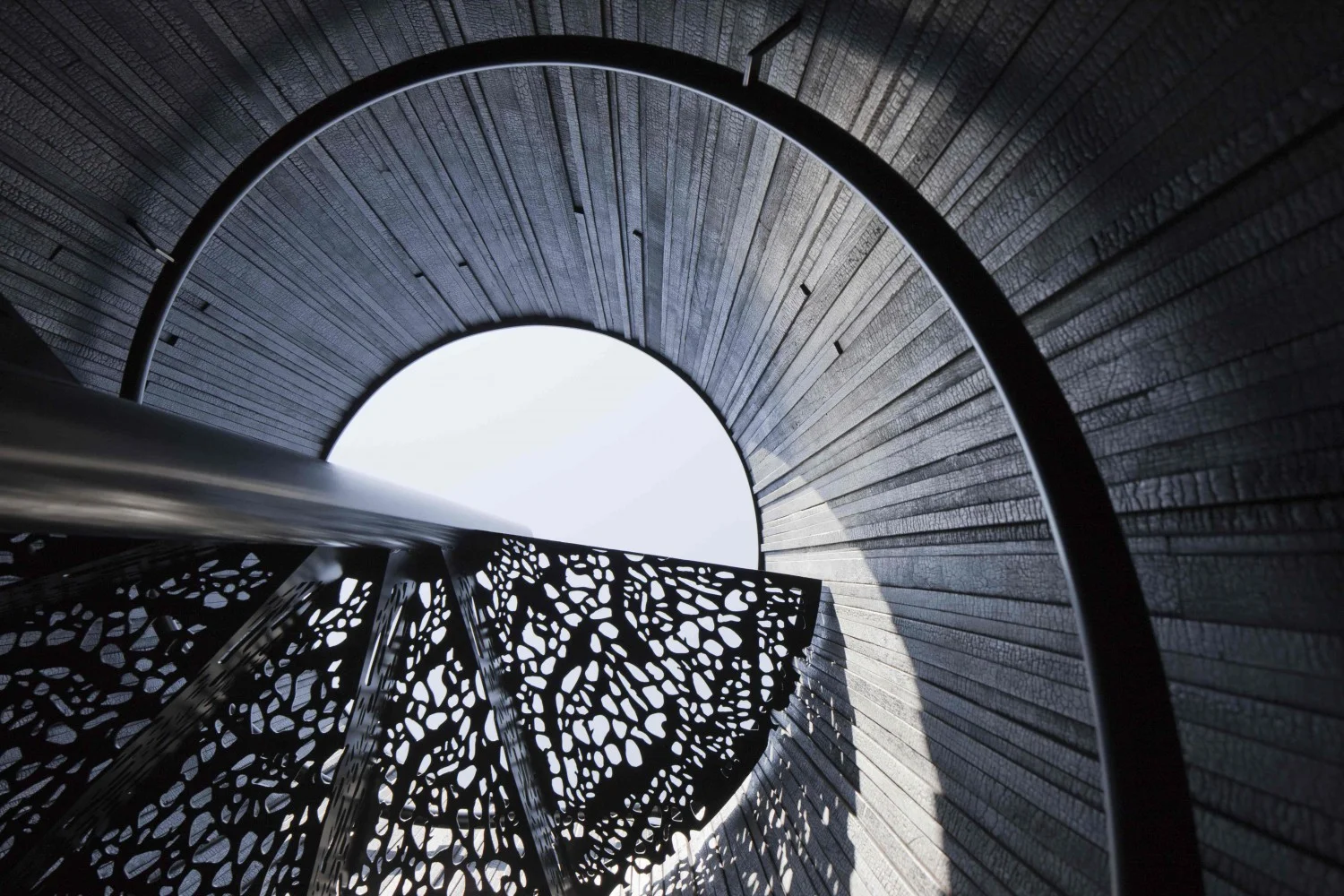
The most controversial and most raved about custom material used on the project is the cedar that was used to clad the bedroom walls and bedroom entry. It was burned through an ancient Japanese technique known as Shou-sugi-ban, or burnt sugi board, where the cedar is burned until carbonized at the surface. Traditionally, it was used as a way to resist fire and rot, because it is flame-retardant and insects don’t like it. “It’s pretty magical when you see it in person, everyone wants to touch it…anyone who comes over raves about the burnt wood walls,” says Dr. Francis. The burnt wood is the perfect complement to the organic feel of the rammed earth.
They say imitation is the highest form of flattery, and in the case of the spiral staircase that leads to the roof deck, it’s true. Inspired by the skeleton of the native Prickly Pear Cactus leaf, Hayes commissioned the perforated staircase design. It is a great visual experience leading you up to the roof deck, which includes a 360-degree view, dumbwaiter to the pantry, and space for a Moroccan palette bed - a great place for friends and family to gather.
The overall house is a piece of art, a sculpture in itself. The way the beautiful design aesthetic and custom craftsmanship blend seamlessly into the natural environment. The way the space changes with the light, the peaceful stillness that washes over you, even though you can hear the wildlife that surrounds you - There are so many moments to enjoy and experience, and that is the real magic.
To see more of the Francis’ gorgeous home, visit DUST at www.dustdb.com
Reprinted from NCW Magazine
Written by Ariane Moore // Photography by Bill Timmerman // Architecture by DUST